
Content

This law requires a publicly held corporation to devise and maintain an effective internal control structure and to keep accurate accounting records. This law came about partly because company accounting records covered up bribes and kickbacks made to foreign governments or government officials. The FCPA made this specific type of bribery illegal as part of the Sarbanes-Oxley Act. A sole proprietor probably doesn’t have to worry too much about controls because he or she owns everything anyway. Notice, however, that the coffee shop referenced above was too small to separate duties among even three or four people, which would have made the theft of cash a lot harder.
How do I do an internal audit checklist?
- Initial Audit Planning.
- Risk and Process Subject Matter Expertise.
- Initial Document Request List.
- Preparing for a Planning Meeting with Business Stakeholders.
- Preparing the Audit Program.
- Audit Program and Planning Review.
Check protectors , cash registers, and time clocks make it difficult for employees to alter certain company documents and records. Segregation of duties requires that someone other than the employee responsible for safeguarding an asset must maintain the accounting records for that asset.
Preventative
In the old days before debit cards, when you drove up to a gas station to fuel up, there were attendants with wads of cash in their pockets to make change for customers who regularly paid in cash. Not remarkably, the company accountants would find at the end of the month accounting internal controls that cash did not reconcile with sales. The cost of putting in extensive control would outweigh the additional collection of cash, so the loss was considered acceptable—up to a point. With the advent of debit cards and self-serve gas, much of that risk went away.
- These controls enable a company provides timely and accurate financial information while complying with the laws of the state.
- If control weaknesses are found, they are analyzed and assessed, particularly in terms of their impact on the consolidated financial statements and the combined management report.
- By following internal controls documentation, employees get a better understanding of the company processes and practices, which helps to establish the company’s practices.
- Many companies do a yearly check of their physical assets through an inventory check.
- Requiring approval for large payments and expenses can prevent unscrupulous employees from making large fraudulent transactions with company funds, for example.
These controls typically prevent an action from happening to negate a loss or mistake completely. Access controls — This involves limiting access to an accounting system using passwords, locks, and other authentication-specific mechanisms. Information and communication — The control structure of a chapter must allow information to be captured, identified, and transferred internally and externally. Detect and prevent fraud through Segregation of Duties — Internal controls distribute responsibilities so that no single individual gets to perform two of the three most important functions of Segregation of Duties. Thus, a different individual or section performs each custody, recording, and authorization. In this way, it becomes harder for fraud to occur or occur without being detected and stopped.
Major Accounting Components of the Sarbanes-Oxley Act
The risk that senior management might override important financial controls to manipulate financial reporting is also a key area of focus in fraud risk assessment. The AICPA, IIA, and ACFE also sponsored a guide published during 2008 that includes a framework for helping organizations manage their fraud risk.
- After the internal control structure is in place, the firm should monitor its effectiveness and make any needed changes before serious problems arise.
- The Audit Committee of the Supervisory Board of Deutsche Telekom AG monitors the effectiveness of the ICS as required by § 107 sentence 2 AktG in conjunction with § 107 sentence 1 AktG.
- Calculating daily or weekly trial balances can provide regular insight into the state of the system, allowing you to discover and investigate discrepancies as early as possible.
- Harmonizing the processes enhances their efficiency and quality and, in turn, improves the reliability of the internal ICS.
The control environment includes many factors such as ethical values, management’s philosophy, the integrity of the employees of the corporation, and the guidance provided by management or the board of directors. The second step in implementing internal controls of accounting is to review your current processes. The goal is to identify who does what and who, if anyone is a check or balance on that process. It is a good idea to explain to your employees the purpose of the process review. You may want to purchase an internal control template to walk you through this process. Another familiar internal control to prevent fraud is to limit access to only authorized personnel, such as preventing unauthorized personnel from getting access to a warehouse and stealing inventory for resale. Another access content might involve allowing only accounting employees to access accounting systems.
Catalog Internal Control Procedures
This includes financial transaction documentation, procurement processes, product design projects, product testing, and internal audits. Before you can inspect procedures to discover weaknesses, you need a full inventory of the processes currently in place. All employees fit into the organizational picture of internal control, whether or not their job responsibilities are directly related to these example activities. Our mission at CFO Strategies is to help business owners make sure their internal control systems are strong and designed to effectively protect the business owners’ interests. This will give any business owner the peace of mind to focus on the important work of growing their business. After the internal control structure is in place, the firm should monitor its effectiveness and make any needed changes before serious problems arise. In testing components of the internal control structure, companies base their thoroughness on the risk assigned to those components.
- Accidental loss is loss that occurs due to honest mistakes being made by individuals.
- DTTL (also referred to as “Deloitte Global”) does not provide services to clients.
- When equipment, inventories, securities, cash and other assets are secured physically.
- Each of these reasons makes internal controls vital parts of a company’s operation.
- Thus, a different individual or section performs each custody, recording, and authorization.
- The bank might have a main server in Tennessee but also mirror all data in real time to identical servers in Arizona, Montana, and even offshore in Iceland.
When data is processed, a variety of internal controls are performed to check the accuracy, completeness and authorization of transactions. Data entered is subject to edit checks or matching to approved control files or totals. Numerical sequences of transactions are accounted for, and file totals are controlled and reconciled with prior balances and control accounts. Development of new systems and changes to existing ones are controlled, as is access to data, files and programs.
Understanding Internal Controls
When this information is made known, companies may face increased costs due to legal fees and reputational risks, as investors might lose confidence in the company and its stocks. Material weaknesses can render the financial data of a company unreliable and ineffective. They prevent auditors and stakeholders from reliably assessing the financial health of the company and determining its stock price. Emerging and growing businesses are often formed by an entrepreneur with a great business idea but not as much knowledge about how to protect their business. When a company segregates the duties of employees, it minimizes the probability of an employee being able to steal assets and cover up the theft. For example, an employee could not steal cash from a company and have the theft go undetected unless someone changes the cash records to cover the shortage. To change the records, the employee stealing the cash must also maintain the cash records or be in collusion with the employee who maintains the cash records.
What are internal control weaknesses in accounting?
Internal control weaknesses are failures in the implementation or performance of internal controls. Even the strongest security measures can be circumvented if a malicious actor identifies an internal control weakness. In fact, more than 5% of companies end up reporting material weaknesses in each audit.
Larger projects, such as hand counting inventory, should be performed less frequently, perhaps on an annual or quarterly basis. Internal controls are the mechanisms, rules, and procedures implemented by a company to ensure the integrity of financial and accounting information, promote accountability and prevent fraud. Internal control is categorized by independence between departments and lines of vicarious duty and authority. It is important that these internal controls verify the dependability and correctness of the data supportive all transactions using control total techniques, sanctions and approvals, contrasts, and other tests of data accuracy.
Internal Controls
As a small-business owner, Ingram regularly confronts modern issues in management, marketing, finance and business law. He previously held senior editorial roles at Investopedia and Kapitall Wire and holds a MA in Economics from The New School for Social Research and Doctor of Philosophy in English literature from NYU.
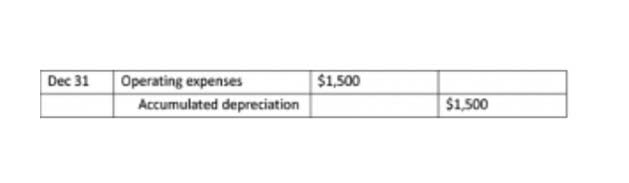
The exact control steps depend on whether a company is using mainframe computers and minicomputers or microcomputers. If you have any comments about the importance of internal controls in accounting, please feel free to contact us. Also, we have provided some best practices about account reconciliations that can be downloaded by selecting the button below. To maintain effective internal controls, management assesses and reviews procedures for controls.
Explore Business Topics
Internal controls allow the owners to ensure that their employees do not give away the profits by giving away sodas and popcorn. Another way to protect financial assets is by requiring all staff members to use the same forms to document monetary transactions or physical inventory. Proper authorization of transactions and activities helps ensure that all company activities adhere to established guide lines unless responsible managers authorize another course of action. For example, a fixed price list may serve as an official authorization of price for a large sales staff. In addition, there may be a control to allow a sales manager to authorize reason able deviations from the price list.
- If you have any comments about the importance of internal controls in accounting, please feel free to contact us.
- Top managers of publicly held companies must sign a statement of responsibility for internal controls and include this statement in their annual report to stockholders.
- Internal controls within business entities are also referred to as operational controls.
- Part of the financial statements involves an independent auditor’s report on the integrity of the financial statements as well as the internal controls.
- After testing their effectiveness, an external auditor will give an opinion as to how accurately a business maintains their internal controls.
Look out for unapproved expenses or raises, non-existent employees, and unapproved hours. Make it a priority to review your company’s financial data so that you can stay abreast of trends and changes in your financial reports. During audits, internal auditors examine the internal controls of a company to check the level of compliance to laws and regulations and also the accuracy of the financial information provided. Internal auditing consists of investigating and evaluating employees’ compliance with the company’s policies and procedures.
How to Use Internal Controls?
Organizations are expected to maintain accurate financial records and correct any discrepancies to benefit their business, employees and customers. Internal controls put procedures in place to quickly detect any mistakes and stop fraudulent activity. Although the accounting department is in charge of implementing and monitoring internal controls, all employees are responsible for understanding and maintaining the policies and procedures that make up their organization’s controls. The management style and the expectations of upper?level managers, https://www.bookstime.com/ particularly their control policies, determine the control environment. An effective control environment helps ensure that established policies and procedures are followed. The Securities and Exchange Commission founded the Financial Accounting Standards Board to develop the guidelines that all accounting professionals ought to follow. The FASB guidelines allow companies to provide financial information in a transparent and useful manner, and this information can be of use when auditing and to investors who want to lay a stake in the company.

They also have a knowledge of the entity’s activities and environment, and commit the time necessary to fulfil their board responsibilities. Management may be in a position to override controls and ignore or stifle communications from subordinates, enabling a dishonest management which intentionally misrepresents results to cover its tracks. A strong, active board, particularly when coupled with effective upward communications channels and capable financial, legal and internal audit functions, is often best able to identify and correct such a problem. At the end of every month, Ted is responsible for preparing monthly financial statements.
Policies and Safety
If the firm has a robust system of internal controls, then the auditors will test the reliability of those controls, and then reduce their other audit activities. Conversely, if the organization has poor internal controls, then the auditors must include substantially more audit procedures in their plan, which drives up the cost of the audit. In short, a robust system of internal control can reduce the price of the year-end audit. This is a significant issue for publicly-held companies, which spend inordinate amounts on annual audits and quarterly reviews by their auditors. You can contact us if you need help establishing internal controls for your accounting and finance department to protect your business assets adequately. Signature Analytics is an outsourced accounting firm providing ongoing accounting support and financial analysis to small and mid-size businesses. No two systems of internal controls are identical, but many core philosophies regarding financial integrity and accounting practices have become standard management practices.

They include a wide range of activities that occur throughout the organization, by supervisory and front-line personnel. Typically, management is responsible for developing an appropriate system of internal controls, but every employee is responsible for following and applying those practices. A third and very important purpose of internal controls is to ensure compliance with federal, state and local business laws. To ensure compliance in the accounting industry, the Securities and Exchange Commission created a special group called the Financial Accounting Standards Board . The guidelines that the FASB set are called Generally Accepted Accounting Principles . There are four main purposes of internal controls in the accounting industry. The first of those is to safeguard the assets of a company from any form of loss.
What are internal controls?
They include Control environment, Risk assessment, Control activities, Information and communication, and Monitoring. Not only do internal controls help a company become more reliable and efficient, they improve the accuracy of a company’s financial report.